Future of Hazardous Energy Control Must Go Beyond Detection
NSC honors NanoSieve for innovative technology that removes hazardous gases in real time to protect workers.


NSC honors NanoSieve for innovative technology that removes hazardous gases in real time to protect workers.
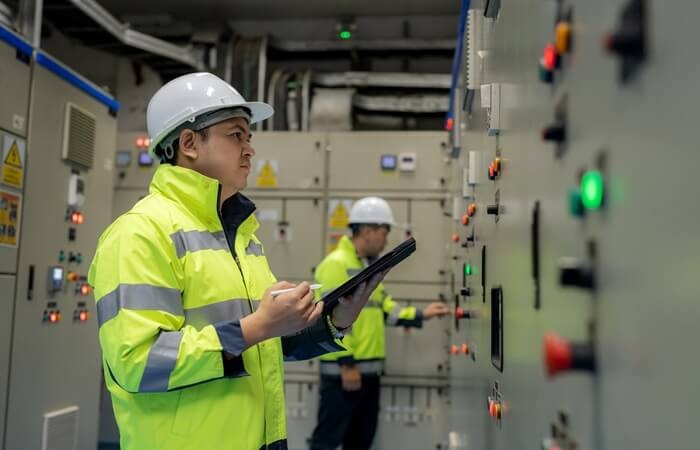
Every day, thousands of workers enter environments where hazardous gases pose an invisible but potentially life-threatening risk. According to the U.S. Bureau of Labor Statistics, nearly 50 workers were killed by uncontrolled hazardous energy in 2023, and many more suffered serious injuries and illnesses.
For decades, gas detection has served as an essential layer of protection. Sensors alert workers when dangerous levels are present, giving them the information they need to respond. But what happens to the gas after the alarm sounds? That’s been a major focus of ours at NanoSieve, and we were proud to showcase our innovative technology at the National Safety Council Work to Zero Safety Innovation Challenge, which focused on reducing workplace incidents involving hazardous energy.
The Work to Zero Safety Innovation Challenge was created to accelerate technologies that can help eliminate serious incidents and fatalities in workplaces. Rather than focusing solely on identifying hazards, the challenge encourages innovators to rethink how technology can actively prevent workers from being exposed to them.
At NanoSieve, we believe hazardous energy control should not only detect danger but also help remove it. Our autonomous gas remediation device removes flammable or toxic gases from the air and immediately begins reducing their concentration in the surrounding environment. Our technology is integrated with gas sensors, so it can both detect and remove gases during leaks.
Traditional gas sensors are incredibly valuable because they tell us when hazardous gases have reached dangerous levels. But the gas leak itself continues, allowing concentrations to rise while workers evacuate, investigate or wait for mitigation measures.
NanoSieve’s device is designed to automatically activate once hazardous gas reaches a defined threshold (i.e., 25% LEL), removing flammable or toxic gases from the air while simultaneously providing alerts and connected monitoring. In pilot testing, we demonstrated that the technology could delay dangerous flammable concentrations by approximately two hours during a real natural gas leak, creating valuable buffer safety time for emergency response and worker protection.
As a chemical engineer, I’ve seen firsthand how quickly routine work can become dangerous when invisible hazards are involved. The workers we think about every day are the people entering confined spaces, responding to gas leaks, operating industrial plants and protecting critical infrastructure. These are environments where natural gas, carbon monoxide, refrigerants, hydrogen, ammonia, battery off-gas and hydrogen sulfide can threaten both worker safety and operational continuity.
Technology should never replace strong safety procedures, training or established controls. By integrating autonomous gas remediation with existing gas detection systems, we are adding another layer of protection that supports workers, safety professionals and emergency responders when every minute matters.
One of the most valuable aspects of the Work to Zero Safety Innovation Challenge is that it brings together innovators and safety leaders who share a common goal: preventing serious incidents before they occur.
Safety issues continue to evolve as workplaces adopt new technologies, energy systems and industrial processes. Meeting those challenges requires collaboration across industries, disciplines and organizations. Programs like the Work to Zero Safety Innovation Challenge create opportunities to test new ideas, validate emerging technologies and connect promising solutions with the employers and workers who can benefit most.
For NanoSieve, being recognized as the Work to Zero Safety Innovation Challenge winner is another step forward in our journey to protect workers. We’re committed to continuing research, expanding real-world pilots and working alongside industry partners like NSC to help make hazardous workplaces safer. We are grateful to the McElhattan Foundation for helping to make programs like this possible.
Learn more about the Safety Innovation Challenge and preventing workers from being exposed to hazardous energy at nsc.org/worktozero.

With a century-long legacy, the National Safety Council is a global center for safety expertise. Let's work together to align resources. We look forward to learning about ways we can join efforts to expand safety everywhere!
There are no items in your cart