0
0
- NSC.org
- NSC Shop
- Injury Facts
- Safety+Health Magazine
The MSD Solutions Commons is a community-powered digital library offering resources to prevent and address musculoskeletal disorders (MSDs) in the workplace. Drawing on expertise from industry leaders, ergo experts, and safety and health professionals, the Commons delivers practical strategies and curated solutions for identifying and mitigating ergonomic and MSD risks, including case studies showcasing innovative technologies and approaches to MSD prevention.
The Commons serves as a central hub for those seeking to implement safety measures, understand current research, or explore viable solutions to transform workplace safety, strengthen workplace ergonomics and reduce the impact of MSDs.

MSD Pledge members — including global companies like Cargill and family-run businesses like Wyffels Hybrids — are taking action to reduce musculoskeletal disorders.
As an awardee in the MSD Solutions Lab's 2024-2025 Pilot Grant program, this case study details how Superior Tube Products partnered with 3motionAI and used its video motion capture technology to quantify the impact of existing safety programs and create actionable data to drive ergonomic solutions for all employees.
Manufacturing Awkward postures/excessive bending or twists Forceful exertions Pushing or pulling Repetitive activities (non-computer related) Organizational factors Artificial intelligence Computer vision Software
As an awardee in the MSD Solutions Lab's 2024-2025 Pilot Grant program, this case study details how Ocean Spray Cranberries worked with Feraru Dynamics LTD to measure and mitigate hand-arm vibration exposures among power tool operators.
Manufacturing Agriculture Forestry Fishing and Hunting Transportation and Warehousing Hand-arm vibration Wearable sensors Software
As an awardee in the MSD Solutions Lab's 2024-2025 Pilot Grant program, this case study details how PepsiCo Global Concentrates teamed up with LifeBooster to collect and analyze ergonomic risk data, form ergonomic learning teams and identify upper-extremity MSD mitigation strategies.
Manufacturing Transportation and Warehousing Awkward postures/excessive bending or twists Forceful exertions Pushing or pulling Repetitive activities (non-computer related) Organizational factors Wearable sensors Software

As an awardee in the MSD Solutions Lab's 2024-2025 Pilot Grant program, this case study details how Wonderbrands partnered with LifeBooster to identify ergonomic risks caused by upper-extremity work.
Manufacturing Awkward postures/excessive bending or twists Forceful exertions Lifting or carrying Repetitive activities (non-computer related) Individual factors Organizational factors Wearable sensors Software

This case study describes Pacific Gas & Electric's (PG&E) experience working with Longitude6 to implement Etiscope wearable sensors for the use of ergonomic risk assessments.
Utilities Awkward postures/excessive bending or twists Compression or contact stress Forceful exertions Hand-arm vibration Repetitive activities (non-computer related) Temperature extremes (heat/cold) Whole body vibration Wearable sensors
This case study from Fleet Pride, a distributor of truck and trailer parts, details the experience of using MākuSafe wearable sensors to reduce MSD risk among workers.
Wholesale Trade Transportation and Warehousing Awkward postures/excessive bending or twists Forceful exertions Temperature extremes (heat/cold) Organizational factors Wearable sensors
This case study highlights two projects involving custom pick planning software that Amazon initiated in select robotic fulfillment centers to 1) direct employees to stow common inventory in the ergonomic "Golden Zone" and not stow heavy inventory in bottom bins and 2) increase the proportion of assigned picks in the "Golden Zone."
Manufacturing Awkward postures/excessive bending or twists Compression or contact stress Forceful exertions Lifting or carrying Overhead work Reaching Repetitive activities (non-computer related) Organizational factors Software
As an awardee in the MSD Solutions Lab's Pilot Grant Program, this case study details how Amerisure Insurance worked with both computer vision provider TuMeke Ergonomics and HeroWear, which specializes in passive back-assist exosuits, to prevent MSDs enterprise-wide.
Finance & Insurance Wholesale Trade Awkward postures/excessive bending or twists Forceful exertions Lifting or carrying Repetitive activities (non-computer related) Organizational factors Wearable sensors
As an awardee in the MSD Solutions Lab's Pilot Grant Program, this case study details how Burlington Hydro used TuMeke Ergonomics to assist with conducting ergonomic assessments of the company’s powerline technicians.
Utilities Awkward postures/excessive bending or twists Forceful exertions Organizational factors Computer vision Software

In this case study, Cargill piloted LifeBooster wearable sensors in 23 meat-processing plants to improve their ability to assess ergonomic risks.
Manufacturing Awkward postures/excessive bending or twists Hand-arm vibration Repetitive activities (non-computer related) Static postures Temperature extremes (heat/cold) Wearable sensors
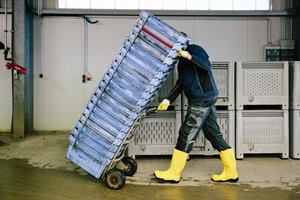
As an awardee in the MSD Solutions Lab's Pilot Grant Program, this case study details how General Electric Aerospace partnered with HeroWear to better understand the operational benefits and worker impact of using exosuits to unload cargo trailers.
Transportation and Warehousing Awkward postures/excessive bending or twists Forceful exertions Lifting or carrying Repetitive activities (non-computer related) Individual factors Organizational factors Wearable sensors

As an awardee in the MSD Solutions Lab's Pilot Grant Program, this case study details how Guarantee Electrical Company worked with TuMeke Ergonomics to detect unsafe postures and glean data-driven insights to optimize their workplace safety programs.
Construction Utilities Awkward postures/excessive bending or twists Forceful exertions Lifting or carrying Repetitive activities (non-computer related) Organizational factors Computer vision Software
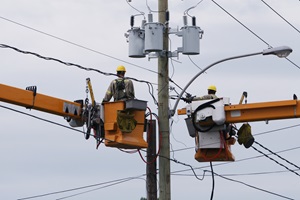
This case study with John Deere details their implementation of powered cart movers as an engineering control to remove the need for employees to manually move heavy loads.
Manufacturing Forceful exertions Pushing or pulling Individual factors Organizational factors Tools and equipment
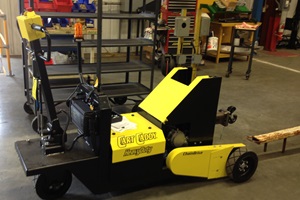
In this case study Life Line Emergency Vehicles, an ambulance manufacturing company, implemented MākuSafe wearable sensors to reduce MSD risk among their workforce.
Manufacturing Awkward postures/excessive bending or twists Forceful exertions Gripping Pushing or pulling Repetitive activities (non-computer related) Individual factors Wearable sensors
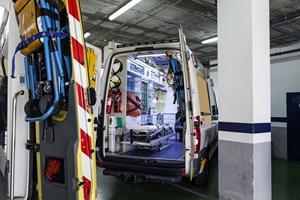
Schneider Electric engaged with ErgoPlus in this case study to deploy Injury Prevention Specialists at select sites to encourage early reporting of discomfort and ensure adequate responses.
Manufacturing Transportation and Warehousing Forceful exertions Gripping Lifting or carrying Pushing or pulling Repetitive activities (non-computer related) Support personnel
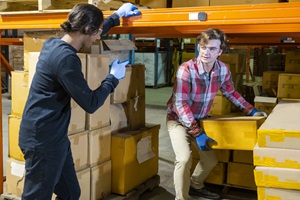
In this case study, Schneider Electric piloted exoskeletons among distribution center warehouse workers to test whether they could reduce back and shoulder injuries from manual material handling activities.
Manufacturing Transportation and Warehousing Awkward postures/excessive bending or twists Forceful exertions Gripping Lifting or carrying Reaching Repetitive activities (non-computer related) Individual factors Wearable sensors
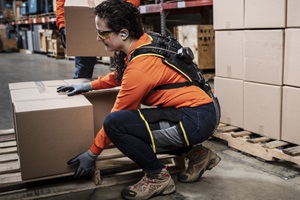
In this case study with Schneider Electric, wearable sensors with the ability to alert employees when engaging in risky postures were piloted at select warehouse sites with manual material handling risks.
Manufacturing Transportation and Warehousing Awkward postures/excessive bending or twists Lack of recovery or rest between tasks Lifting or carrying Overhead work Reaching Repetitive activities (non-computer related) Organizational factors Wearable sensors
There are no items in your cart