Thirty Years of National Safety Month: Leadership, Prevention, Progress
Reflecting on three decades of advocacy, education and awareness around preventable injuries and fatalities.


Reflecting on three decades of advocacy, education and awareness around preventable injuries and fatalities.
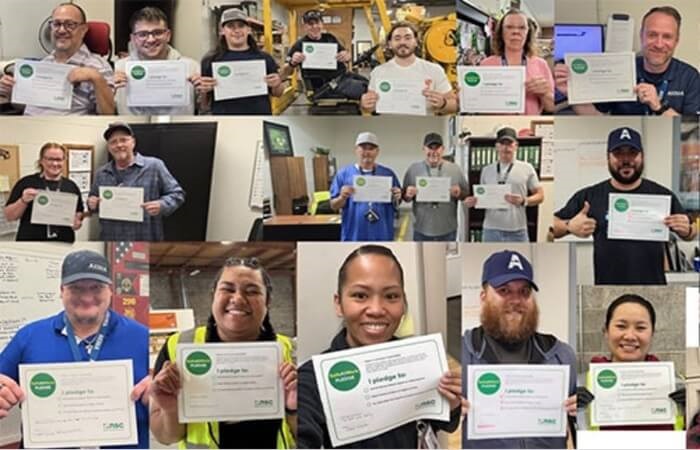
Every day, preventable injuries change lives on our roads, in our workplaces and across communities. For more than 100 years, the National Safety Council has advanced a simple truth: serious incidents and fatalities are preventable. As NSC celebrates the 30th anniversary of National Safety Month this June – beginning with a focus on Moving Safety Forward – this milestone is a chance to reflect on progress made in the last 30 years and recommit to what comes next.
Prevention is at the core of the Council’s work, driven by leadership, partnership and innovation to reduce risk before harm occurs.
This principle was formalized in 2000 with the Safety Agenda for the Nation and later advanced through landmark initiatives such as Road to Zero, launched in 2016 with the U.S. Department of Transportation to eliminate roadway fatalities, and Work to Zero, introduced in 2018, in partnership with the McElhattan Foundation, to eliminate workplace fatalities through emerging safety technologies.
More recently, NSC strengthened its focus on preventing injuries at the system level. This includes the Prevention through Design (PtD) Award and introducing the MSD Solutions Lab, in partnership with Amazon, to address a leading cause of workplace injury – musculoskeletal disorders. The Council also launched the Serious Incident and Fatality (SIF) Prevention Model, in partnership with U. S. Steel, providing practical tools to address high risk hazards before tragedies occur.
Transportation safety has long been central to the Council’s work. NSC has led efforts to address some of the most persistent and emerging risks facing drivers and pedestrians alike.
From a partnership in 1996 with the National Highway Traffic Safety Administration focused on passenger safety to the launch of Alive at 25, which helps keep young drivers safe, NSC protects people at every stage of life. In 2009, NSC became the first national organization to call for a total ban on cell phone use while driving, before distracted driving was widely recognized as a public health crisis.
As vehicle technology evolved, NSC launched MyCarDoesWhat.org in 2015 to educate drivers on advanced safety features, followed by the expansion of DriveitHOME in 2016, in partnership with General Motors, strengthening parent‑teen engagement around safe driving. These efforts reflect how technology can save lives, but only when people understand how to use it responsibly.
As safety challenges evolved, NSC expanded its focus to include public health risks. These efforts included the 2013 Prescription Nation report highlighting the opioid crisis, joining the NIOSH Total Worker Health® Affiliate Program in 2014 to reinforce a holistic approach to safety and health, and initiatives like SAFER that supported safe work during the COVID‑19 pandemic.
In 2023, NSC launched Respond Ready Workplace, helping employers address overdose deaths at work by supporting access to naloxone, training and resources. These initiatives reinforce that prevention extends beyond traditional safety hazards into broader health challenges.
NSC has consistently leveraged technology and research to enhance prevention efforts. NSC introduced web‑based safety training in 2000, and the Campbell Institute was launched in 2013 – advancing research on leading indicators and world-class EHS practices.
More recently, NSC has highlighted how emerging technologies, such as sensors, wearables, robotics and artificial intelligence, can help organizations identify hazards earlier and prevent serious incidents. These efforts have emphasized how technology is part of a broader system integrating leadership, culture and worker engagement.
As safety challenges grow more complex, NSC will continue to embrace technology as a critical enabler of prevention, while remaining grounded in evidence, ethics and human‑centered design.
Thought leadership will remain a defining role for the Council. NSC will continue to provide trusted, unbiased data through Injury Facts®, providing policymakers, researchers and practitioners with clear insights into injury trends and effective prevention strategies, updating guidance and training based on the latest evidence.
Finally, partnerships will play a critical role to the Council’s impact. Whether collaborating with multinational employers, small and mid‑sized businesses, public agencies, labor organizations or technology providers, NSC will serve as a convener and catalyst for collective action.
Thirty years of National Safety Month show what’s possible when leadership, innovation and partnership align. Creating safer roads, workplaces and communities is a shared responsibility – and it requires action at all levels. Together, we can build a future where everyone can live their fullest lives.
Find free National Safety Month resources at nsc.org/nsm.

With a century-long legacy, the National Safety Council is a global center for safety expertise. Let's work together to align resources. We look forward to learning about ways we can join efforts to expand safety everywhere!
There are no items in your cart