0
0
- NSC.org
- NSC Shop
- Injury Facts
- Safety+Health Magazine
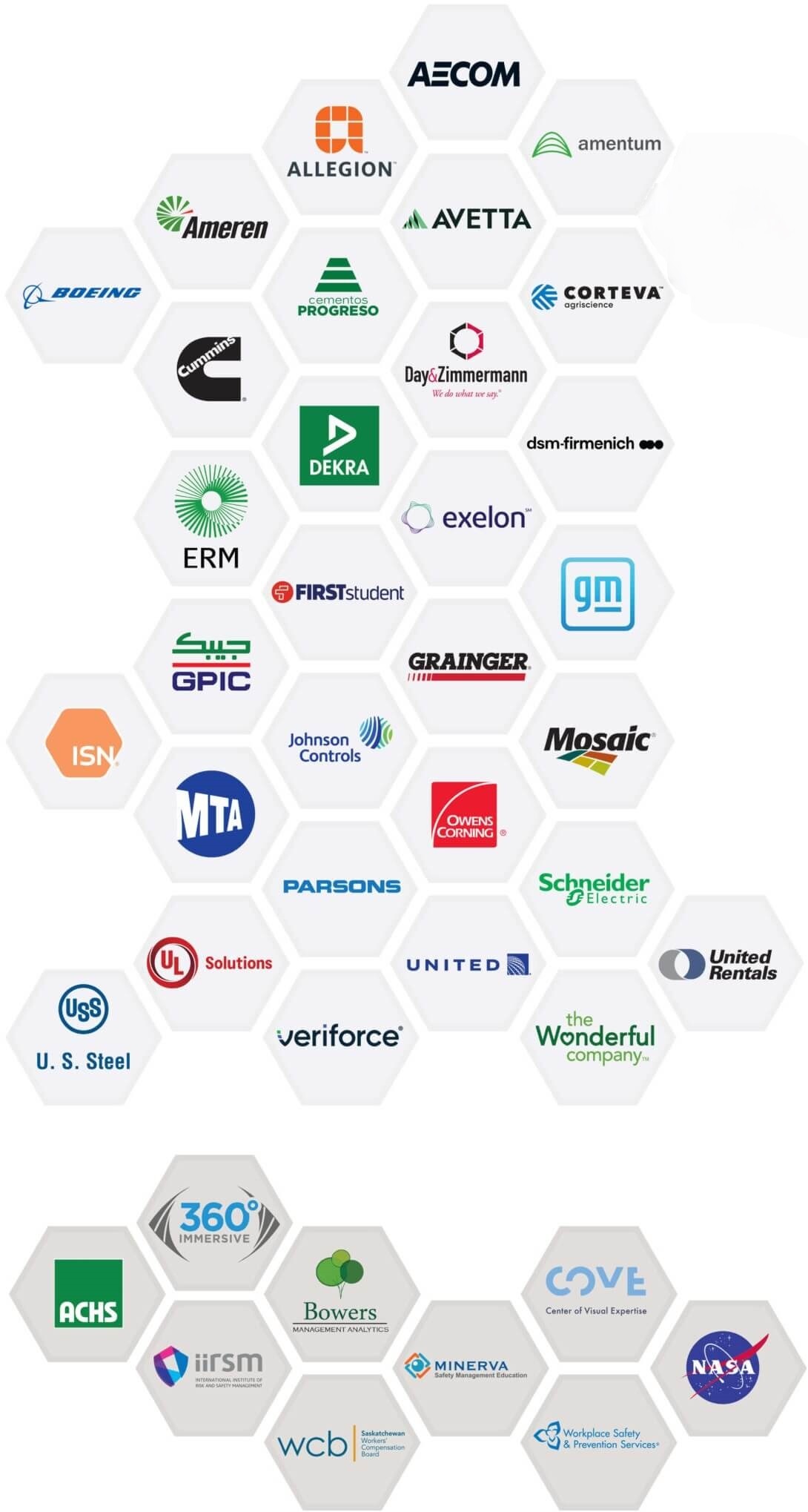
Member and partner organizations share the Institute’s commitment to advancing safe, high-performing workplaces and workforces around the world. Their continued support enables us to share knowledge, insights and best practices through original content, impactful presentations and engaging events.
Find the latest list of Campbell Institute members and partners here.
In 2025, the Campbell Institute welcomed Veriforce and Johnson Controls, further strengthening its network of organizations committed to EHS excellence.
Every day, organizations around the world count on Veriforce to help them hire with confidence, reduce incidents and keep workers safe in high-hazard environments. It’s a mission they’ve driven since 1993, continually finding new ways to make risk management simpler, faster and more effective.
Johnson Controls is a world leader in smart buildings, creating safe, healthy and sustainable spaces. For more than 140 years, they’ve made buildings better and now they’re transforming them again with their award-winning digital technologies and services. Johnson Controls uses artificial intelligence and data-driven solutions to give companies deeper insight into their building’s health, sustainability and performance, changing the way they design, operate and maintain indoor environments and leading to a new era of autonomous buildings.
Literature Review: The Evolving Relationship
Between EHS and Voluntary Turnover
Voluntary turnover disrupts operational efficiency, erodes organizational knowledge and can lead to a decline in overall performance. In November 2021, voluntary turnover rates in the U.S. reached a 20-year high, highlighting the profound changes in workforce dynamics. This review explores how EHS initiatives can be leveraged to improve employee retention.
White Paper - The Heart of Workplace Safety:
Fostering Emotional Engagement for Lasting Impact
In today’s workplace, cultivating a safety culture that resonates both emotionally and intellectually with employees is essential for fostering a resilient and proactive environment. This paper explores the critical elements and strategies for building a safety culture that transforms safety from a compliance-based requirement into a shared, intrinsic organizational value.
Literature Review: Exploring the Role of Generative AI in
Occupational Environment, Health and Safety
Presents results of a literature review on the evolving landscape of generative artificial intelligence in occupational environment, health and safety domains. Drawing from 27 peer-reviewed articles, industry reports and grey literature sources published between 2018 and 2024, this review captures a snapshot of how GenAI is beginning to make its mark across diverse EHS functions.
White Paper - The Challenge of Safety Metrics:
Leading Indicators in Real-world Applications
Explores the real-world conditions that influence whether leading indicator programs take root and deliver lasting value. Drawing on insights from professionals across logistics, aviation and manufacturing, the report highlights the organizational, cultural and strategic factors that shape success.
In February, Campbell Institute members participated in the 2025 Future of EHS for over 200 EHS professionals, business leaders, and researchers. The event included Campbell Institute securing speakers and hosting a technical session. Moving forward, this event has been combined with the NSC Spring Safety Conference and Expo and the NSC HOP Summit to create a new, leadership focused event each Spring, the NSC Safety Summit.
The Campbell Institute Track at the NSC Safety Congress & Expo featured robust programming focused on ASTM Standards around classification, employee & executive engagement, and hazardous risk. Attendance included over 1,000 participants across all events (Campbell Institute Forum, Executive Summit, and the Campbell Institute Workshops.
The Campbell Award was not given in 2025 to accommodate a criteria refresh and timing adjustment.
The Institute hosted one virtual meeting in August, engaging participants in a diverse agenda covering two Psychological Safety sessions, EHS Organizational Structure, and an open benchmarking session.
In 2025, the Institute was supported by its Steering Committee, which provided leadership and guidance to help shape key initiatives and priorities. The Institute was also supported by the Content Subcommittee, whose members advanced knowledge sharing, benchmarking, and innovative projects.
Lorraine M. Martin
CEO
National Safety Council
Brian Callahan
Chair, Campbell Institute
President & Chief Operating Officer
ISN
Amy May
Vice Chair, Campbell Institute
Vice President, Environment, Health & Safety, and Manufacturing & Safety Engagement
The Boeing Company
Taylor Abel
Chair, Engagement Subcommittee
Director – Driver, Transport & Fleet Safety
United Rentals
Mohammed Alhashemi
Safety, Security, Health & Environment Manager (SSHEM)
GPIC
Erika Flores
Senior EHS Specialist
Allegion
Jim Haiser
Lead Personal Safety Expertise Manager
Dow
Rob Junnier
Partner – Global Safety Programs
ERM
Dana Mueller
Director, Global Management Systems, Corporate – SH&E
AECOM
Ron Kurtz
Director, QHSE
Firmenich International SA
Geoff Walter
Corporate Director, Enterprise Safety
Owens Corning
Al Zucco
Vice President, Safety & Sustainability
UL Solutions
All members have the option of sitting on this committee and are encouraged to participate by emailing [email protected].
Keith Bowers
Bowers MA
Melanie Burgess
Cummins
Scott DeBow
Avetta
Joseph DiPlacido
Exelon
Luis Fernandez
Allegion
Gregg Ferris
AECOM
Toni Fleming
DEKRA
Shaun Holdaas
Boeing
Katie Lashua
Boeing
Brit Little
Grainger
Timothy Mason
Allegion
Danielle McLean
Mosaic
Ryan Rodriguez
ISN
Tracy Roller
First Group
Mitchel Schubert
Allegion
Stephen Scruggs
Schneider Electric
Sally Smart
Grainger
Kurt Southerland
UR
Peregrin Spielholz
Boeing
Suzanne Tannernbaum
First Group
Al Zucco
UL Solutions
There are no items in your cart